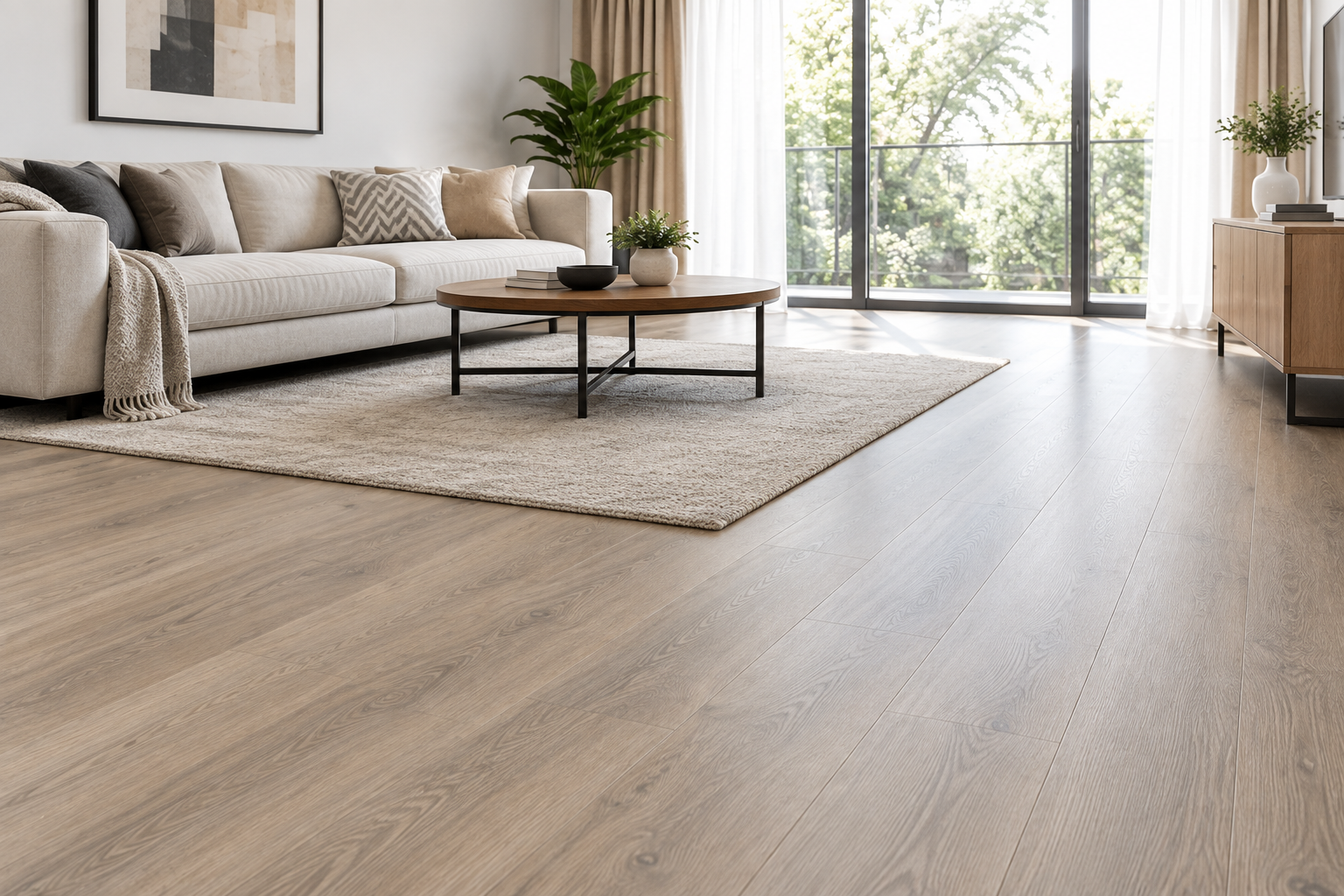
If you’ve walked into a newly renovated home, office, or retail store recently, chances are you’ve stepped on SPC flooring without even realizing it. Over the last few years, SPC has quietly become one of the most in-demand flooring materials — and for good reason.
In this guide, we break down what SPC flooring actually is, how it’s made and why it’s outperforming traditional options.
What is SPC Flooring?
SPC stands for Stone Plastic Composite (also referred to as Stone Polymer Composite). It’s a type of rigid-core flooring engineered by combining limestone powder with PVC compounds and stabilizers, compressed under heat and pressure to form a dense, solid core. It is also referred to as rigid-core Luxury Vinyl Tiles (LVT), Luxury Vinyl Planks (LVP) or Vinyl Flooring in some cases.
On top of this rigid core sits a high-definition printed design layer — usually replicating the look of natural wood or stone — followed by a durable wear layer that protects the surface from scratches, stains, daily wear and a layer of UV coating.
The result is a floor that looks like premium hardwood or natural stone but performs like an industrial-grade surface.
How SPC Flooring is Different from Laminate and Vinyl
Laminate flooring a multi-layer synthetic floor product that looks like real wood or stone using a photographic image layer under a clear protective coating. However, it uses a fiberboard core, which means it can swell, warp, or degrade when exposed to moisture.
Standard vinyl flooring (WPC or typical LVT) is more flexible and softer, making it prone to denting under heavy furniture or high foot traffic, and less dimensionally stable in extreme temperatures.
SPC flooring, thanks to its dense limestone-based core, solves both problems. It’s rigid, stable, and 100% waterproof — while still being easier to install than tile, stone or hardwood.
SPC flooring supplied by us comes with patented click and lock technology which saves a significant amount of labor compared to tiles, stone and hardwood installation.
Key Benefits of SPC Flooring
1. 100% Waterproof
Because the core itself contains no organic or wood-based material, SPC flooring doesn’t absorb water, swell, or warp. This makes it ideal for kitchens, bathrooms, basements, and even commercial spaces prone to spills.
2. Dimensionally Stable in Extreme Climates
India’s climate swings from humid coastal heat to dry winters, and floors need to handle that without expanding, contracting, or cracking. SPC’s rigid core holds its shape across a wide temperature range.
3. Highly Durable
With a tough 0.5mm (20 mil) wear layer on top, SPC flooring, by Essen Global LLP, resists scratches and stains — making it well suited for high-traffic areas, residential homes, offices, retail stores, and hospitality spaces.
4. Low Maintenance
Unlike hardwood, there’s no sanding, polishing, or resealing required for SPC flooring. Routine sweeping and occasional mopping is enough to keep it looking new for years.
5. Quick, Clean Installation
Our SPC flooring uses a patented click-lock installation system, which means it can be installed directly over most existing subfloors without extensive prep work — significantly cutting down project timelines compared to tiling or solid wood installation.
6. Design Versatility
SPC flooring is available in a wide range of finishes, from rich walnut and oak wood tones to marble and stone-look designs — giving designers and homeowners the aesthetic flexibility they want without compromising on performance.
7. Better Acoustics
SPC flooring, supplied by Essen Global, comes with either 1mm or 2mm of IXPE backing which helps with sound absorption.
Where is SPC Flooring Used?
SPC flooring’s combination of durability and design flexibility makes it suitable across a wide range of spaces:
- Residential homes — living rooms, bedrooms, kitchens, and balconies
- Commercial offices — high-traffic areas that need to look polished year-round
- Retail stores — spaces that need durability without sacrificing aesthetics
- Hospitality — hotels and restaurants where both looks and long-term wear matter
- Healthcare facilities — spaces requiring hygienic, easy-to-clean flooring
Is SPC Flooring Right for Your Project?
If your project needs a flooring solution that balances premium aesthetics with real-world durability — especially in spaces exposed to moisture, heavy footfall, or fluctuating temperatures — SPC flooring is worth serious consideration. It’s particularly valuable for architects, interior designers, and builders looking to reduce post-installation maintenance callbacks while still delivering a high-end look.
About Essen Global LLP
Sourcing flooring for an overseas market is a different game from buying for a single project. International importers, distributors, and contractors need an exporter who can guarantee consistent quality, reliable container-load supply, and dependable export logistics — not just a single attractive sample.
That is exactly where Essen Global LLP operates. We are a construction materials exporter supplying premium wood-finish SPC (Stone Plastic Composite) flooring to importers, distributors, and buyers across international markets.
We work with distributors, developers and designers all across the globe to help identify the right flooring solution for their space — from material selection to specifications. Essen global is an exporter of premium SPC flooring.
To explore our SPC flooring range, click here.
Why International Buyers Are Sourcing SPC Flooring from Essen Global LLP?
For importers and distributors evaluating suppliers, the appeal of SPC flooring goes beyond looks. A few export-relevant advantages stand out:
- Competitive Landed Cost
- Material Forecast Assistance
- Deeper stock availability in the finishes that move fastest internationally
- Faster quote to dispatch turnaround
- More predictable batch consistency across large container-load quantities
What an Export Partner Like Essen Global LLP can Deliver
When you’re buying by the container, not the box, the exporter relationship matters as much as the product. As a construction materials exporter, Essen Global works with international importers, distributors, and contractors on:
- Bulk Export Pricing — pricing structured for container-load and project-scale orders.
- Export Documentation & Logistics — support for international buyers evaluating compliance, packaging, and shipping requirements.
- Consistent Batch Quality — sourcing and stocking discipline so a reorder matches the original sample.
- Reliable Lead Times — clear timelines from order confirmation to dispatch, so importers can plan around their own project schedules.
- Responsive Buyer Support — direct communication for specification queries, sample requests, and order tracking.
Partner With Essen Global for Your Next SPC Flooring Export Order
Whether you’re an importer building out a new product line, a distributor restocking for the season, or a contractor sourcing for an active international project, Essen Global LLP offers the export pricing, stock depth, and logistics guidance to support container-load orders end to end.
To get in touch for an export quote or to request samples, click here.
If you’re a distributor, retailer, or contractor sourcing SPC flooring in bulk — whether from the US, Europe, the Middle East, or beyond — this guide answers the questions we hear most often from buyers evaluating suppliers and placing container orders.